Expanding and strengthening our global network has always been a key part of Omipa’s strategy.
Today, we are pleased to introduce our agent in Turkey, Mr. Tamer Atçi, from Naturel Dış Ticaret, a company that has been representing European plastic solutions in the Turkish market since 1990.
With decades of experience in the plastics industry, Mr. Atçi, has built long-term partnerships and supported customers in improving their production processes through reliable technologies and technical expertise. His deep knowledge of the market and hands-on experience make him a valuable reference point for Omipa in the region.
To better understand his background, the dynamics of the Turkish market, and the value of a local presence, we asked him a few questions.
Interview with Tamer Atçi
1. How did you first get to know Omipa, and how did you become part of the Omipa team?
My first encounter with the Omipa name and logo dates back to my internship in 1973 at Guven Plastik, where I later worked for 20 years as responsible for production.
At that time, the factory operated an Omipa line designed as a coextrusion group suitable for three-layer production. The line initially consisted of 90 mm and 45 mm extruders, and later, with the addition of a second 90 mm extruder, it reached its full configuration, completing the three-layers coextrusion group.
In fact, Mr. Gilberto Cazzani, the founder of Omipa, told me that this line was one of the very first complete systems the company had ever produced.
This setup allowed us to manufacture both films and sheets. The development not only improved production stability but also enabled higher quality and performance in multi-layer products.
2. From your point of view, what are the main opportunities and challenges of the Turkish market for extrusion technologies today?
From my point of view, the Turkish market for extrusion technologies presents significant opportunities alongside some structural challenges.
On the opportunity side, Turkey has a strong and dynamic plastics converting industry, supported by a well-developed manufacturing base and a strategic geographical position between Europe, the Middle East, and Asia.
This makes the country an important production and export hub. There is continuous investment in modern and high-capacity extrusion lines, particularly in packaging, construction, and technical films. In addition, the growing demand for flexible packaging and multilayer structures creates a favorable environment for advanced extrusion technologies such as coextrusion systems.
Another important opportunity is the increasing focus on recycled materials and sustainability. Turkish converters are showing more interest in using post-consumer recycled (PCR) and post-industrial recycled (PIR) materials. This drives demand for extrusion technologies that can handle material variability, improve melt filtration, and ensure consistent product quality. Equipment suppliers offering solutions for energy efficiency, waste reduction, and recyclability are therefore well positioned in the market.
On the other hand, there are also challenges. One of the main issues is economic volatility, including currency fluctuations and financing costs, which can delay investment decisions. Additionally, while interest in recycled materials is growing, maintaining consistent quality of recycled raw materials remains a key challenge. This requires more advanced process control, filtration systems, and know-how.
Sustainability regulations—especially those aligned with the European Green Deal—are also pushing manufacturers to adapt quickly. While this creates opportunities, it also requires significant investment in new technologies and processes.
In summary, the Turkish extrusion market is promising and evolving, with strong growth potential driven by sustainability trends, but success will depend on the ability to manage economic risks and adapt to increasing technical and environmental requirements.
3. How will Omipa’s permanent presence in Turkey benefit customers in the region, both from a commercial and a relationship standpoint?
Omipa’s permanent presence in Turkey will bring significant advantages to customers in the region, both commercially and in terms of long-term relationships.
From a commercial perspective, being locally established allows Omipa to respond more quickly and efficiently to customer needs. Shorter response times, easier communication, and faster access to technical support and spare parts will reduce downtime and improve overall operational efficiency for customers. In addition, a local presence enables better alignment with market conditions, more competitive pricing structures, and closer follow-up of ongoing projects.
From a relationship standpoint, proximity is a key factor in building trust. Having a dedicated local team strengthens communication, facilitates regular customer visits, and allows for a deeper understanding of specific production challenges and expectations. This creates a more collaborative approach, where Omipa can act not only as a supplier but as a long-term solution partner.
Furthermore, Turkey offers various government incentives to support industrial investment, technology transfer, and local partnerships. These may include tax advantages, investment incentives, and support for R&D and advanced manufacturing. A permanent presence in Turkey can allow Omipa and its customers to better benefit from such programs, making investments more attractive and sustainable.
In summary, Omipa’s local presence will enhance responsiveness, strengthen customer relationships, and create added value by combining global expertise with local support, while also leveraging potential government incentives to support growth and innovation in the region.
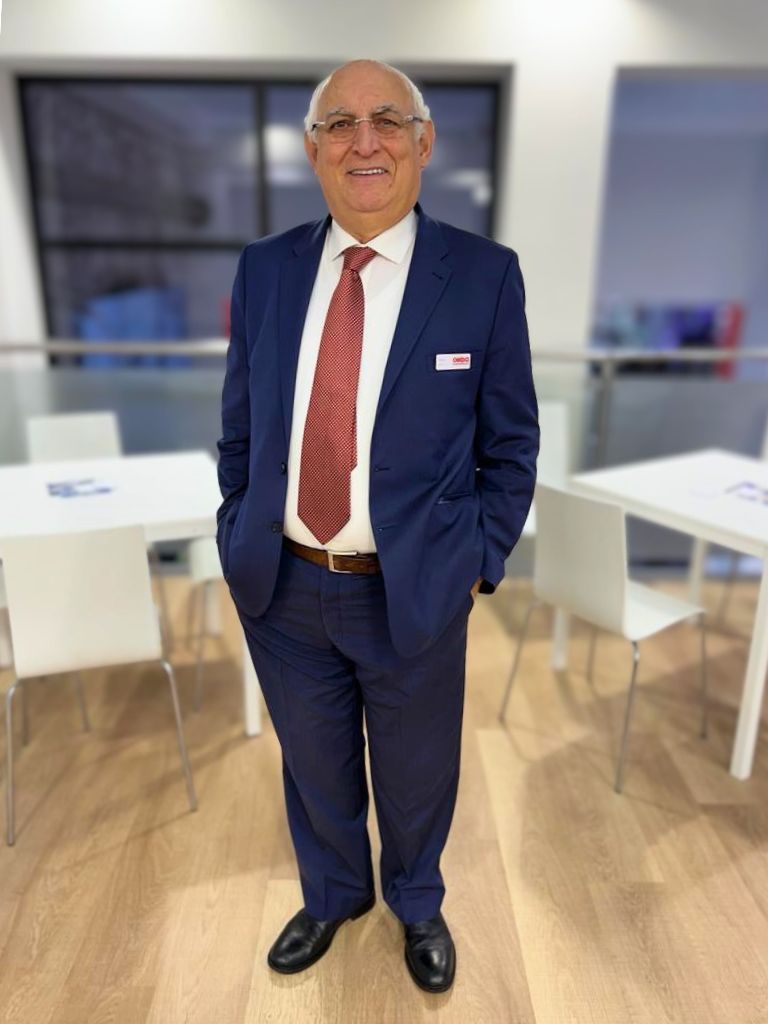
Tamer Atçi
NATUREL DIS TIC. LTD. STI
Inonu Cad. Sumer Sok.
No:3CK D.13, 34736 Kozyatagi Istanbul – Turkey
Looking ahead
With the support of experienced partners like Tamer Atçi, Omipa continues to strengthen its international presence and provide customers with not only advanced extrusion technologies, but also reliable local support.
A combination that makes the difference in an increasingly competitive and evolving market.